From aircraft power source to mobile energy asset
Industry news ·
Electrification is changing more than the energy source used by ground support equipment.
It is also beginning to change the relationship between equipment and airport electrical infrastructure.
Traditionally, the distinction has been relatively clear. Fixed infrastructure distributes electricity, while mobile GSE performs a defined operational task.
Battery-powered equipment introduces another possibility because electrical energy can now travel with the equipment itself.
This allows airports to rethink where stored energy sits within the airside system.
Using the battery beyond its primary function
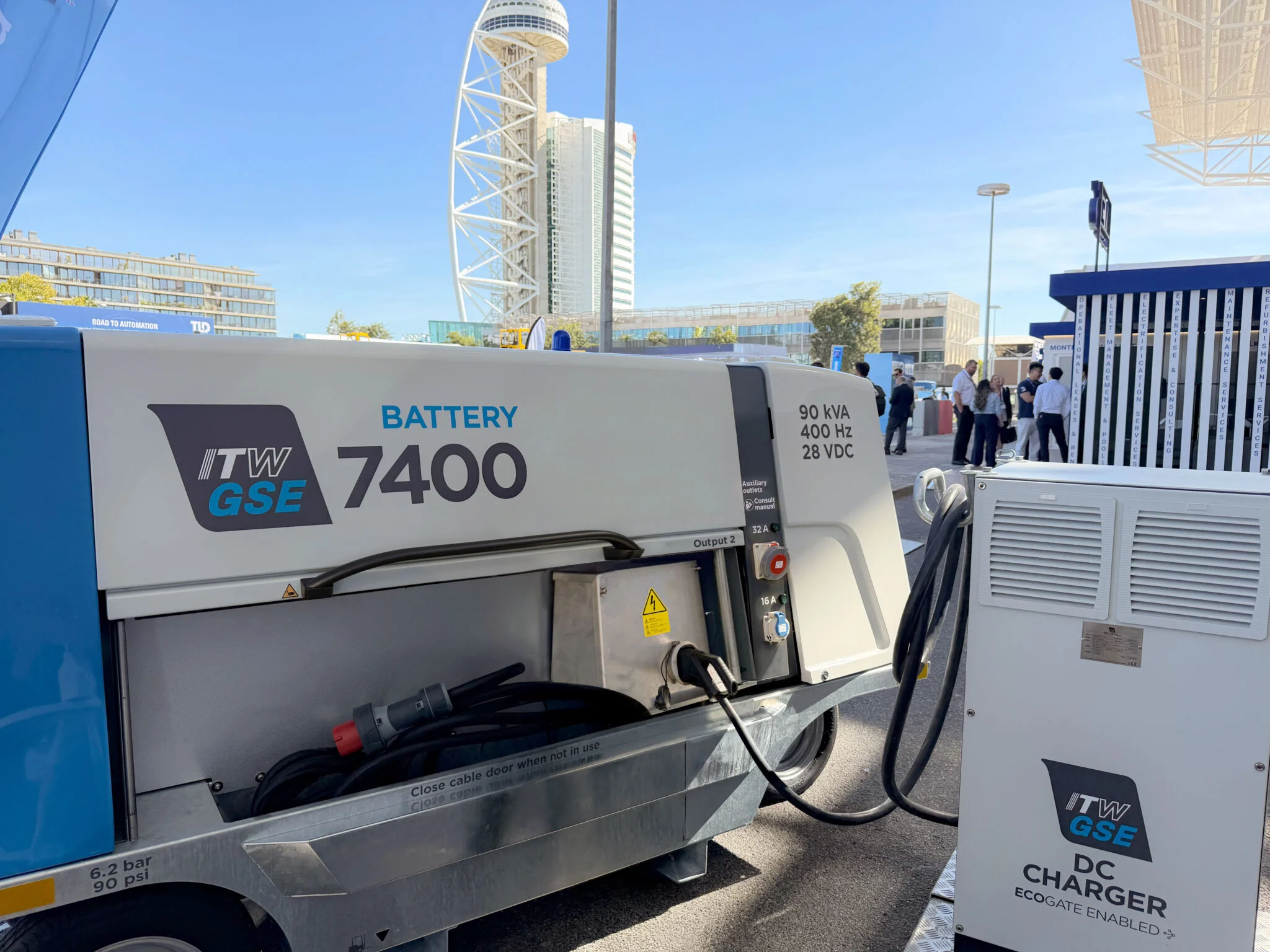
The ITW GSE 7400 eGPU provides 400 Hz aircraft ground power from an onboard battery and can therefore operate at gates, remote stands, hangars and locations without fixed 400 Hz infrastructure.
For CE versions of the 90 kVA unit, ITW GSE has now introduced optional AUX outlets that allow the stored battery energy to be used beyond the aircraft power connection.
The technical concept is simple, but its operational significance is broader.
The battery is no longer solely an energy source for one defined output. Through the auxiliary connections, it can also become a mobile source of electrical energy for the wider airside operation.
The operational argument is accompanied by an OPEX consideration. Compared with diesel-powered GPUs, battery-powered eGPUs avoid many of the moving parts and benefit from lower energy and maintenance costs.
In an ITW GSE 90 kVA calculation, the eGPU reaches a lower total cost of ownership than diesel after around two years on average.
A different way to think about airside energy
Airport electrification is often approached through individual equipment categories: electric GPUs, tractors, loaders, or charging infrastructure.
As the number of electrical applications increases, however, the boundaries between equipment and energy infrastructure may become less rigid.
Mobile stored energy can complement fixed electrical installations by taking power into parts of the operation where permanent supply is either unavailable or less practical.
That does not eliminate the need for infrastructure. Instead, it adds another tool for matching available power with operational demand.
Mobile energy as part of the infrastructure mix
The new AUX capability on the 90 kVA ITW GSE 7400 eGPU is one example of this evolution.
Its primary function remains aircraft ground power. But the ability to make the battery available through additional outlets means operators can view the unit not only as GSE, but also as a transportable store of electrical energy.
As airside systems become more electrified, this type of flexibility may become increasingly relevant to the way airports plan the interface between mobile equipment and fixed power infrastructure.
The question may therefore evolve from simply asking, “What equipment can we electrify?” to also asking, “How can the power already available be used more effectively across the operation?”